
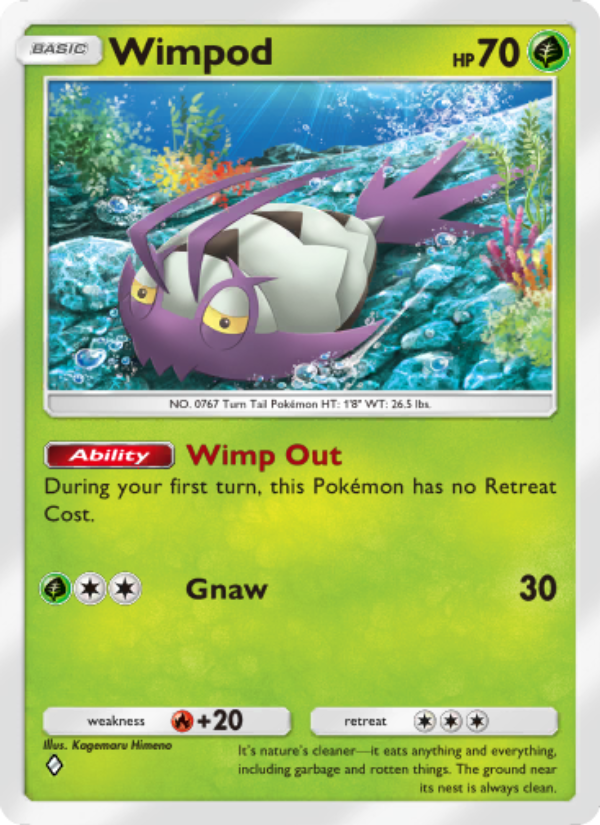
Image courtesy of TCGdex.net
Case Study: Wimpod and the Mechanics Behind Price Spikes
In the Pokémon TCG marketplace, price spikes often arrive like a surprise tide: a surge of demand washes over a card whose supply feels fixed, and collectors and players alike scramble to secure a copy. Why do some cards suddenly demand premium prices while others linger quietly on shelves? The case of Wimpod, a Grass-type Basic from the Celestial Guardians set (A3), offers a rich lens into how rarity, print variants, and collectible appeal intersect with gameplay-friendly design to spark market movement ⚡🎴.
Wimpod carries the aura of a rarity that collectors chase—the One Diamond designation for this card mirrors the ultra-rare treatment in some sets. Its Celestial Guardians provenance (set A3) hosts a mix of holo, normal, and reverse variants, with Wimpod appearing in holo and non-holo forms. The set itself is not just a collection of numbers; it’s a thematic tapestry—cosmic imagery, celestial motifs, and a variety of print runs that keep prices responsive to supply and desirability. When a holo version surfaces with distinctive artwork, it can become a focal point for price speculation, even if the card’s core gameplay value on a tabletop isn't the dominant driver. The holo chase often acts like a magnet for collectors, creating demand that can outpace the available stock in the short term 🔥.
From a gameplay perspective, Wimpod is a thoughtful pocket pick for builder decks that prize flexibility. It’s a Basic Grass-type with 70 HP and a modest attack profile: Gnaw for 30 damage. Its real-game feature, the Wimp Out ability, alters early-turn dynamics by giving the player no Retreat Cost on the first turn. That small but meaningful advantage can fuel early aggression or set up smoother later plays, especially in matchups against faster opponents. While Wimp Out is not a knockout punch, it nudges the card toward niche demand among players who value tempo and retreat-cost manipulation in the opening turns. Weakness to Fire at +20 adds a touch of risk—if your opponent’s lineup is heavy with Fire types, the math of early trades gets a little trickier. All of these design quirks—HP, type, retreat, and a strategic ability—lay the groundwork for why some individuals in the market prize a holo Wimpod above others, independent of raw play power 🔎💎.
Illustration matters in price dynamics, too. Wimpod’s art is by Kagemaru Himeno, whose style helps the card pop on the table and in collectors’ photo albums. The aesthetic appeal of a holo with shimmering rainbow finishes often translates into secondary-market interest, especially when the artwork feels fresh in the context of a set’s broader storytelling. Collectors aren’t just chasing numbers; they’re chasing the story, the memory, and the “look” of a card that resonates with a personal collection. This is where the market’s emotional calculus kicks in—art, nostalgia, and the satisfaction of completing a theme can prompt spikes that outgrow strict gameplay demand 🎨🎴.
Another ingredient behind sudden price shifts is print-run reality. Celestial Guardians has a defined but sometimes fluid print ecosystem: official counts sit around a total of 239 cards for the set with 155 official cards listed. Wimpod’s variants—normal, holo, and reverse—mean multiple “collectible flavors” exist within the same character, each with its own supply curve. For rare cards, holo versions carry higher retail and resale thresholds, but even non-holo versions can appreciate when demand converges with a limited window of opportunity (e.g., a peak interest moment, a social media spotlight, or a limited-time reprint scare). The market loves to test these thresholds, and Wimpod’s One Diamond rarity makes it a natural candidate for short-term appreciation when holographic allocations tighten, or when new collectors discover a card with a compelling look and a versatile playstyle that can fit into multiple deck archetypes 🔄🎮.
It’s also worth noting that Wimpod’s market visibility is shaped by its legality status in the formats. According to the data, it’s not currently legal in standard or expanded formats, which can influence both casual play interest and price movement. When a card is out of current rotation, collectors often shift focus toward condition, provenance, and variant collectibility rather than tournament-ready demand. This dynamic can create sporadic spikes as new buyers discover the card’s aesthetic or as niche communities rally around specific sets and prints. The absence from current playstreams doesn’t erase value; it can instead recalibrate what drives a spike: rarity, artistry, and the thrill of a chase 🧭.
When you’re watching the market for potential spikes, consider a few practical signals that go beyond raw price. Look for holo-only supply squeezes, spikes in listing activity, or rising interest in the Celestial Guardians subset as a whole. Watch for shifts in social sentiment around the set—cosmic-themed aesthetics, popular art styles, or a new collector trend can push Wimpod and its holo variant into the spotlight. And because Wimpod is part of a broader ecosystem that includes other cards with unique variants and rarities, the ripple effects from a single card’s spike can spread to nearby prints and even other cards within the same set 🎯💡.
For players and collectors alike, Wimpod shows how a card’s value emerges from a blend of rarity, aesthetic appeal, strategic utility, and print discipline. The charm of a Grass-type creature with a compact moveset, a compelling ability, and a striking holo presentation can ignite a spike that defies simplistic explanations. In the end, the marketplace rewards those who see both the gameplay potential and the collectible story—the two threads that make Pokémon TCG markets as exciting as a well-timed Gnaw attack ⚡🎴.
As you explore the market, remember that the card’s provenance is part of the allure. Wimpod’s Celestial Guardians identity—illustrated by Kagemaru Himeno and offered in holo, normal, and reverse variants—emphasizes how a single character can become a touchstone for a set’s narrative and a collector’s short-term excitement. The wonder of Pokémon TCG collecting lies in these micro-stories: a cute, nature-cleaning creature, a rare holo shine, and a turn-one advantage that prompts fresh deck-building ideas. If you’re chasing the next price spike, keep your eyes on print variety, variant popularity, and the enduring appeal of pristine art with a compelling backstory 🔎✨.
Clear Silicone Phone Case Slim Durable ProtectionMore from our network
- https://crypto-acolytes.xyz/blog/post/hot-blue-star-reframes-milky-way-at-215-kpc/
- https://cryptoacolytes.zero-static.xyz/433e197c.html
- https://wiki.digital-vault.xyz/wiki/post/pokemon-tcg-stats-vanilluxe-card-id-xy8-45/
- https://crypto-acolytes.xyz/blog/post/scare-duster-3825-scare-duster-nft-stats/
- https://crypto-acolytes.xyz/blog/post/nft-stats-golden-ticket-118-from-golden-ticket-collection/
Wimpod
Set: Celestial Guardians | Card ID: A3-021
Card Overview
- Category: Pokemon
- HP: 70
- Type: Grass
- Stage: Basic
- Dex ID:
- Rarity: One Diamond
- Regulation Mark: —
- Retreat Cost: 3
- Legal (Standard): No
- Legal (Expanded): No
Description
It's nature's cleaner—it eats anything and everything, including garbage and rotten things. The ground near its nest is always clean.
Abilities
-
Wimp Out — Ability
During your first turn, this Pokémon has no Retreat Cost.
Attacks
| Name | Cost | Damage |
|---|---|---|
| Gnaw | Grass, Colorless, Colorless | 30 |
Support Our Decentralized Network
Donate 💠More from our network
- https://crypto-acolytes.xyz/blog/post/hot-blue-star-reframes-milky-way-at-215-kpc/
- https://cryptoacolytes.zero-static.xyz/433e197c.html
- https://wiki.digital-vault.xyz/wiki/post/pokemon-tcg-stats-vanilluxe-card-id-xy8-45/
- https://crypto-acolytes.xyz/blog/post/scare-duster-3825-scare-duster-nft-stats/
- https://crypto-acolytes.xyz/blog/post/nft-stats-golden-ticket-118-from-golden-ticket-collection/