
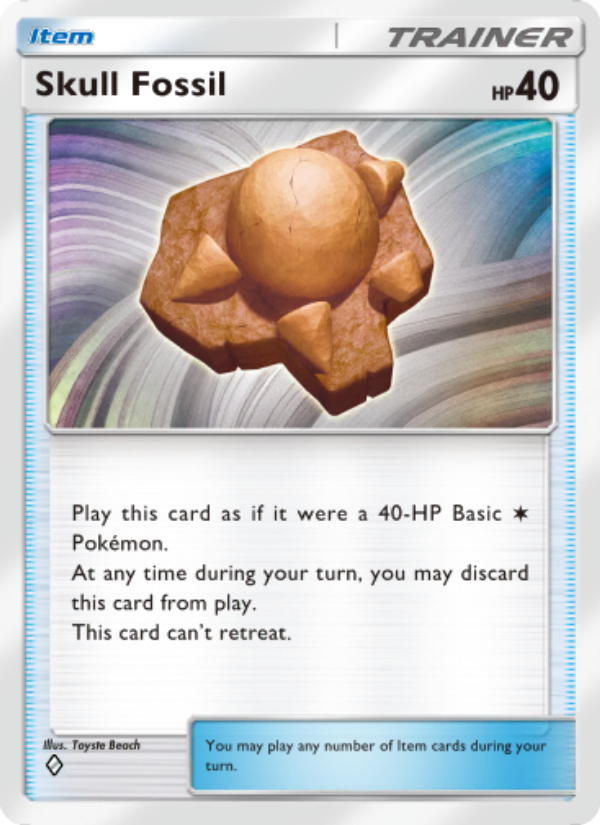
Image courtesy of TCGdex.net
Regional Variants and the Skull Fossil: A Closer Look Across Sets
In the sprawling world of the Pokémon TCG, a single concept can appear in many flavors across multiple print runs. Skull Fossil, a Trainer Item from the Space-Time Smackdown expansion, serves as a prime example of how regional variants and printings evolve to keep players and collectors engaged ⚡. This card, illustrated by Toyste Beach, shows up in several forms—normal, reverse, and holo—with first edition prints not part of this particular release. That mix of formats is exactly what fans refer to when they talk about regional or cross-set variants, each print telling a slightly different story about the same fossilized relic.
The bones of the story: why variants exist
Pokémon TCG sets are designed around themes, narratives, and mechanical ecosystems. Skull Fossil belongs to Space-Time Smackdown (set id A2), a name that conjures time-warped battles and space-age adventures. When a card travels through print runs, it often receives different treatment—foil treatments, border changes, logo re-styles, and even subtle art iterations by different illustrators. In Skull Fossil’s case, you’ll find normal, holo, and reverse variants as part of the same card family, with no first-edition printing in this specific line. This is a common reality for many collectors: a single card can exist in multiple "regional" flavors within the same overarching set family, each flavor appealing to different collecting goals—rareness, aesthetic, or nostalgia. The holo variant, for example, typically commands more attention from collectors who prize the gleam of foil while the reverse foil appeals to those who value the contrast of non-foil art with foil backdrops.
The Space-Time Smackdown set itself carries a curious footprint: official card count sits at 140 within the official tally and 207 across all printings. That disparity hints at reprints, promos, and alternate art routes that communities across regions chase with fervor. Skull Fossil’s own print run embraces this idea—normal and reverse variants exist side by side with holo, offering collectors layered narratives: “which edition did you pull, and how does it fit your collection’s timeline?” The inclusion of a holo variant naturally nudges market interest upward, while the non-foil copies preserve a different kind of allure—clean lines and bold illustration that stand out in binder pages too. 🔥
Gameplay texture: what the card actually does
Beyond its collector appeal, Skull Fossil adds a quirky gameplay texture. Described as an Item Trainer with the ability to be played as if it were a 40-HP Basic Colorless Pokémon, this card blurs the line between Item and Pokémon, a concept that has fascinated players since the fossil-era mechanic was introduced to revive or shield niche strategies. The line “At any time during your turn, you may discard this card from play. This card can't retreat.” opens a deliberate tempo choice: you can deploy a pale, temporary frame of defense or a decoy to stall while you set up a more robust engine. The practical implication is a small but meaningful decision window—do you burn this Fossil as a shield now, or save it for a later moment when your opponent commits to an attack? In regional variants, this utility can feel different across printings—foil art catching the eye mid-match, or a reverse variant glinting under game-light and your binder’s shelf glare. 🎴
From a strategic perspective, Skull Fossil’s alignment with the Space-Time Smackdown motif (and the booster pairing with Dialga in some printings) hints at a time-manipulation theme. Even though it’s not a typical attacker, the card’s existence in a set that toys with time and space encourages players to experiment with “what-if” plays: what if you tempo out a few turns by stalling with 40 HP of colorless resilience, while your real threats prepare behind the fossil façade? The charm here is less about raw power and more about creative deck design and timing—an underrated joy for players who love card design as much as card battles. ⚡💎
Art, rarity, and the collector’s lens
Toyste Beach’s illustration anchors Skull Fossil’s art with a retro-futurist vibe that fits Space-Time Smackdown’s theme. The holo version’s shimmer and the reverse foil’s reflective texture give each variant its moment in the spotlight, inviting collectors to chase the flavor they personally connect with—the gleam of holo for showy shelves, or the crisp, unadorned clarity of the normal print for a minimalist binder aesthetic. The “One Diamond” rarity tag signals a mid-to-late rarity in the set’s spectrum, and its status within the set architecture often influences pricing behavior in secondary markets. The dual reality of Skull Fossil—an Item with a Pokémon-like vibe—also raises interesting questions for legality in standard vs. expanded play in different regions, a reminder that variant handling isn’t just about looks; it’s about how and where players are allowed to use these cards in tournaments. The fact that the legal status shows standard/expanded as false highlights the special-case nature of fossil-themed printings and their heritage within the broader ecosystem. 🔮
As collectors trade across regions and print runs, the art and the rarity weave a narrative of continuity and surprise. Skull Fossil’s multi-variant presence is a neat microcosm of how the TCG evolves: a familiar object—an ancient fossil—reimagined across eras, with different foil choices and photo finishes inviting new fans to discover old ideas in new light. The result is a card that is as much a piece of lore as a practical game tool, a tiny ambassador for the long, winding history of Pokémon card design. 🎨
MagSafe Phone Case with Card HolderMore from our network
- https://crypto-acolytes.xyz/blog/post/nft-stats-wallet-echo-3qq-from-wallet-echoes-collection/
- https://crypto-acolytes.xyz/blog/post/nft-stats-malware-1279-from-malware-relics-collection/
- https://crypto-acolytes.xyz/blog/post/klout-genesis-hashtag-1283-klout-genesis-hashtags-nft-stats/
- https://blog.digital-vault.xyz/blog/post/why-reflecting-mirror-became-mtgs-cult-favorite-card/
- https://articles.zero-static.xyz/blog/post/intuitions-art-homages-to-fantasy-classics-in-mtg/
Skull Fossil
Set: Space-Time Smackdown | Card ID: A2-144
Card Overview
- Category: Trainer
- HP:
- Type:
- Stage:
- Dex ID:
- Rarity: One Diamond
- Regulation Mark: —
- Retreat Cost:
- Legal (Standard): No
- Legal (Expanded): No
Description
Support Our Decentralized Network
Donate 💠More from our network
- https://crypto-acolytes.xyz/blog/post/nft-stats-wallet-echo-3qq-from-wallet-echoes-collection/
- https://crypto-acolytes.xyz/blog/post/nft-stats-malware-1279-from-malware-relics-collection/
- https://crypto-acolytes.xyz/blog/post/klout-genesis-hashtag-1283-klout-genesis-hashtags-nft-stats/
- https://blog.digital-vault.xyz/blog/post/why-reflecting-mirror-became-mtgs-cult-favorite-card/
- https://articles.zero-static.xyz/blog/post/intuitions-art-homages-to-fantasy-classics-in-mtg/