
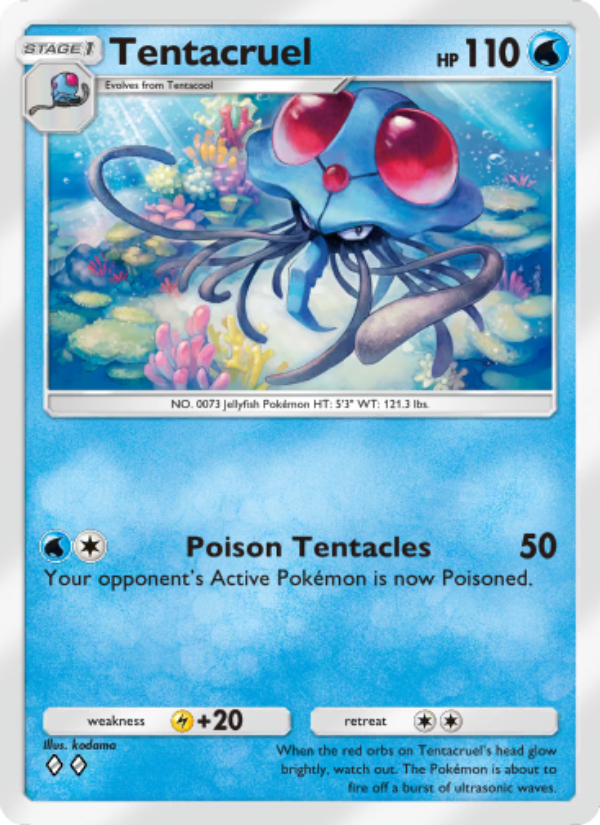
Image courtesy of TCGdex.net
Tentacruel Alternate Art in Genetic Apex: A Visual Showdown Across Versions
In the ever-evolving world of the Pokémon TCG, alternate art cards are a treasure hunt for fans who crave more than just numbers on a card. The Tentacruel from the Genetic Apex set (A1) stands as a vivid example: a holo, normal, and reverse version share the same stats, but the alternate art treatment — illustrated by Kodama — elevates the creature into a striking, collector-ready moment. With a HP of 110 and a Water typing, this Tentacruel feels both aquatic and electric in its presence, a contrast that mirrors the tension between strategy and spectacle ⚡🎨.
The illustration by Kodama captures Tentacruel’s menace in a way that the standard and reverse versions don’t quite replicate. The holo treatment adds a glimmering vitality that makes the purple-blue tendrils feel almost alive, refracting light as Tentacruel readies its next move. The card’s lore text about the glowing red orbs on its head hints at the moment before a sonic assault, a narrative beat that alternate art often leans into — a frozen-in-action frame that invites you to imagine the moment just before release. This is more than a card; it’s a story you glimpse before the dice start rolling 🔥💎.
When the red orbs on Tentacruel's head glow brightly, watch out. The Pokémon is about to fire off a burst of ultrasonic waves.
Two Diamond rarity and the art of value
Genetic Apex situates Tentacruel as a Two Diamond rarity, signaling a higher tier of collectibility within the set. While the numbers on the card — HP 110, Water typing, Stage 1 with Tentacool as the pre-evolution — remain constants across variants, rarity and presentation drive how players value the piece. The alternate art version isn’t just prettier; it’s a coveted window into Kodama’s artistic approach and the set’s broader direction. For players chasing a complete Evolution family or long-time fans who collect holo and alternate art alike, this Tentacruel presents an aspirational target. The charm of alternate art often translates into display-worthy shelf presence as well as potential long-term value in a changing market ⚡🎴.
Gameplay notes: how the art intersects with play
Beyond aesthetics, Tentacruel’s mechanics anchor its role in a deck. Its single attack, Poison Tentacles, costs Water and Colorless energy and deals 50 damage, with the added effect that your opponent’s Active Pokémon becomes Poisoned. In practice, that status can swing tempo, enabling you to slow opponents down while you apply pressure with a steady 50-damage punch. With a retreat cost of 2 and a vulnerability to Lightning (+20), Tentacruel sits in a middle ground: it can survive early skirmishes long enough to set up a turn where Poison Tentacles lands decisively. The holo version’s glow isn't just eye candy; it helps the card stand out during mid- and late-game draws, a psychological edge in a crowded playfield ⚡🎮.
- Normal vs. Alternate Art: The base artwork emphasizes the card’s silhouette and water-element feel, while the alternate art amplifies mood, dynamics, and texture — offering a different narrative impression while preserving the same game stats.
- Holo vs. Reverse: The holo variant shines with foil accents, catching the light as you move Tentacruel across the battlefield. The reverse version reverses that foil treatment onto the card’s background. The alternate art, meanwhile, is typically a full-bleed, non-border composition that highlights Kodama’s artistry in a bold, collectible way.
- Strategic implications: If your deck leans on status effects and pressure over raw burst, Poison Tentacles benefits from any complementary Field or Trainer cards that extend poison viability or stall the opponent while Tentacruel applies chip damage.
- Display value: Collectors weigh the rarity and the foil treatment, especially when the art breaks from the standard template. This is where the allure of a Two Diamond rarity and an artist-driven alternate version comes into sharp focus 🔎.
Art, lore, and the thrill of discovery
Kodama’s interpretation brings a cinematic quality to Tentacruel. The red-orbed menace, the glint of water-slicked surfaces, and the sense of imminent motion create a moment you might wish to relive on the tabletop. The genetic apex of the set—Genetic Apex—grounds the creature in a future-forward galaxy of Pokémon, where evolution is both biological and stylistic. The description’s emphasis on ultrasonic waves adds a touch of narrative tension that fans can savor as they hold a holo card that seems to hum with energy before a flip or a draw. It’s this blend of game-ready mechanics and storytelling that makes alternate art a gateway to deeper engagement with the TCG community 🎨🔥.
For those who curate their collections with a storyteller’s eye, the tentacled menace becomes a focal point. Its stance, the draped tentacles, and the glow of the orbs aren’t just decorative choices—they’re a visual cue that tells you this Tentacruel is prepared for a climactic moment. The art invites you to consider not only how this card performs in a match, but how it would look enshrined in a display — a reminder that the Pokémon TCG is as much about wonder as it is about winning 💎🎴.
Neon Gaming Mouse Pad Rectangle 1/16 Inch Thick Rubber BaseMore from our network
- https://articles.zero-static.xyz/blog/post/returnal-postlaunch-analysis-how-the-ascension-update-transformed-the-loop/
- https://blog.zero-static.xyz/blog/post/reddit-discussions-and-absol-memes-rock-pokemon-tcg/
- https://crypto-acolytes.xyz/blog/post/george-plays-clash-royale-785-gpcr-nft-collection-nft-stats/
- https://transparent-paper.shop/blog/post/stable-diffusion-xl-prompt-neon-cyberpunk-mythic-creature-labyrinth-motif-glow-high-contrast-digital-illustration/
- https://blog.rusty-articles.xyz/blog/post/iconic-infantry-veteran-art-why-mtg-illustrations-endure/
Tentacruel
Set: Genetic Apex | Card ID: A1-063
Card Overview
- Category: Pokemon
- HP: 110
- Type: Water
- Stage: Stage1
- Evolves From: Tentacool
- Dex ID:
- Rarity: Two Diamond
- Regulation Mark: —
- Retreat Cost: 2
- Legal (Standard): No
- Legal (Expanded): No
Description
When the red orbs on Tentacruel's head glow brightly, watch out. The Pokémon is about to fire off a burst of ultrasonic waves.
Attacks
| Name | Cost | Damage |
|---|---|---|
| Poison Tentacles | Water, Colorless | 50 |
Support Our Decentralized Network
Donate 💠More from our network
- https://articles.zero-static.xyz/blog/post/returnal-postlaunch-analysis-how-the-ascension-update-transformed-the-loop/
- https://blog.zero-static.xyz/blog/post/reddit-discussions-and-absol-memes-rock-pokemon-tcg/
- https://crypto-acolytes.xyz/blog/post/george-plays-clash-royale-785-gpcr-nft-collection-nft-stats/
- https://transparent-paper.shop/blog/post/stable-diffusion-xl-prompt-neon-cyberpunk-mythic-creature-labyrinth-motif-glow-high-contrast-digital-illustration/
- https://blog.rusty-articles.xyz/blog/post/iconic-infantry-veteran-art-why-mtg-illustrations-endure/