
Image courtesy of TCGdex.net
How Jirachi Mirrors Pokémon Evolution in the TCG
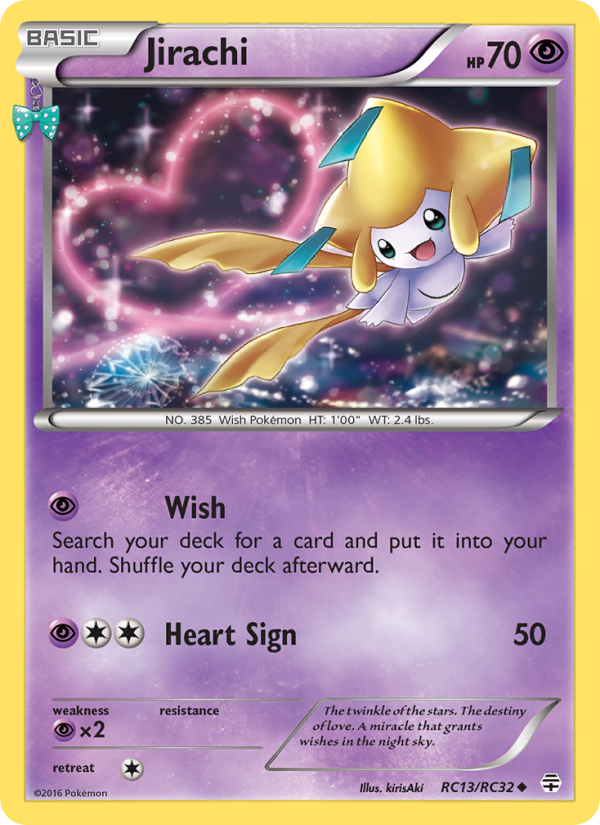
Pokémon TCG fans love the tactile thrill of evolving their teams on the fly, watching a lineup of Basic Pokémon blossom into strategic powerhouses right before their eyes. The card we’re exploring today—Jirachi from the Generations set—offers a compact, thoughtful reflection of that evolution-centered mindset. With its Basic Psychic nature, 70 HP, and two distinct attacks, Jirachi might seem small, but it embodies a recurring theme in the TCG: evolution isn’t just about a creature becoming stronger on the battlefield; it’s about the tactical preparation that precedes that upgrade. ⚡
Jirachi, illustrated by Kiri sAki (note the precise credit on the card image, not every Jirachi card has the same illustrator), is a curious anchor point for discussing how the TCG mirrors the evolving dynamics of the video games. The card is labeled as Basic and Psychic type, with 70 HP. As a member of the Generations set—card count 83 in official, 117 in total for the cycle—Jirachi sits at a crossroads: it can search and set up for future evolutions, while still participating in the immediate tempo of a match. Its rarity is Uncommon, which makes it a wholesome, attainable target for players building a balanced early-game plan. The illustration, the holo variant options, and the shared design language of Generations all contribute to a sense of nostalgia for trainers who remember the original paths of evolving their teams across the early days of the TCG.
Two paths to evolution, two learning moments
- Wish — the tutor that foreshadows evolution: This Psychic attack costs a single Psychic energy and reads, “Search your deck for a card and put it into your hand. Shuffle your deck afterward.” At first glance, this is a classic tutor effect, but its implications for evolution are especially telling. Because you fetch a card from the deck, you can specifically hunt for an Evolution card—an Evolution card such as a Stage 1 or Stage 2 Pokémon—to prepare your next big upgrade. The key is that the card lands in your hand, not directly on the Bench. You then need to draw into it or play it on your next turn to bring that evolution into play. This mirrors the in-game arc where trainers discover or unlock the means to evolve later in an adventure, reinforcing the sense of long-term planning over immediate power. In tournament terms, Wish buys you a turn’s breathing room to assemble the right evolution line—just as a trainer might set up a critical evolution chain in the video games.
- Heart Sign — reliable offense while you plot your next evolution: The second attack costs Psychic, Colorless, Colorless and deals 50 damage. It isn’t a decimator on its own, but it provides a steady source of pressure while you gather the pieces for a stronger late-game stage. The dual-colorless component echoes the flexible nature of real-world evolutions: you often need a mix of energy types or energy acceleration to unlock that evolved form. Jirachi’s two-attack setup mirrors the dual aims of many evolving decks: apply early damage to keep your opponent honest and simultaneously prepare the mechanics that will allow you to swap into a more powerful form. This reflects how trainers in the games rely on both immediate trainers’ tools and the long-term buildup that culminates in a triumphant evolution moment.
From a gameplay perspective, Jirachi demonstrates a microcosm of evolution strategy in the TCG. You start with a Basic that can contribute right away via Heart Sign, while Wish acts as a forward-looking tool, enabling you to search for the exact Evolution card you’ll want to deploy when the timing is right. This is the TCG’s parallel to the game’s evolution mechanic: don’t just strength-train a single creature; create the conditions for a powerful upgrade. The card’s Weakness is Psychic ×2, a reminder that the very forces guiding evolution can also expose you to specific counters, adding a layer of risk to your plan. The Retreat cost of 1 ensures you stay mindful of resource management—evolving is as much about managing energy and placements as it is about raw power. In that sense, Jirachi is a teachable model of the evolution-first mindset that shaped the early TCG era.
Collectors and the lore of evolution
Beyond the rules, Jirachi’s place in Generations taps into a broader nostalgia for trainers who observed and collected the steps of evolution across the franchise. The Generations set is known for its celebration of iconic Pokémon and the shared history of the games, and Jirachi’s role within that framework resonates with collectors who chase Uncommon rarity cards that deliver practical value without breaking the bank. The card’s holo variants—the standard, reverse, and holo options—capture that shimmering nostalgia of pulling a prized piece from a booster pack, a thrill that mirrors pulling off a satisfying evolution in a heated match.
In terms of market and collectibility trends, Jirachi sits in a sweet spot for many players and collectors. Its pricing data—reflected in recent market snapshots—suggests a healthy, accessible target for those building a diversified deck or a modest collection. The illustrator credit to kirisAki adds another layer of charm for enthusiasts who track artist signatures and card art provenance as part of their collecting journey. While the card’s ability to tutor a deck for a future evolution might not single-handedly turn the tide of a match, it remains a meaningful piece of the evolution puzzle—an emblem of how the TCG encodes the same growth narrative we experience in the video games.
Looking ahead: how this mirrors the evolution cycle in play
As you draft decks and plan your turns, consider how Jirachi invites you to think like a strategist who respects the rhythm of evolution. You don’t just want a creature to power up; you want a plan that enables that upgrade at the right moment. Wish empowers you to seed the deck with the tools for your future evolution, while Heart Sign keeps you in the fight as you assemble the necessary components. It’s a graceful reminder that the thrill of evolution—so central to Pokémon lore—operates within the TCG through careful pacing, resource management, and timely card selection. This is where the game’s design shines: a compact card like Jirachi can illuminate a broader principle that many players chase—turn-by-turn growth that culminates in a decisive, evolved form on the battlefield. 🔥
For players curious about the Generations era and the exact card data, Jirachi’s entry remains a solid starting point. With its 70 HP, Psychic typing, and the two distinct avenues of offense and deck tutoring, it’s a compact but meaningful piece of the evolution story—the kind of card that makes you think not just about what your next turn does, but what your next evolution will require—and when.
Slim iPhone 16 Phone Case Glossy Lexan PolycarbonateMore from our network
- https://transparent-paper.shop/blog/post/vector-art-holographic-glow-neon-green-tribal-shaman-gravity-wave-texture-cyberpunk/
- https://blog.crypto-articles.xyz/blog/post/using-deepslate-copper-ore-in-the-overworld-120/
- https://blog.crypto-articles.xyz/blog/post/nft-data-clippy-1863-from-clippy-collection-on-magiceden/
- https://wiki.digital-vault.xyz/wiki/post/pokemon-tcg-stats-pikachu-card-id-basep-1/
- https://crypto-acolytes.xyz/blog/post/nft-stats-solgod-925-from-solgods-collection/
Jirachi
Set: Generations | Card ID: g1-RC13
Card Overview
- Category: Pokemon
- HP: 70
- Type: Psychic
- Stage: Basic
- Dex ID: 385
- Rarity: Uncommon
- Regulation Mark: —
- Retreat Cost: 1
- Legal (Standard): No
- Legal (Expanded): Yes
Description
Attacks
| Name | Cost | Damage |
|---|---|---|
| Wish | Psychic | |
| Heart Sign | Psychic, Colorless, Colorless | 50 |
Pricing (Cardmarket)
- Average: €3.4
- Low: €0.1
- Trend: €3.28
- 7-Day Avg: €3.32
- 30-Day Avg: €3.54
Support Our Decentralized Network
Donate 💠More from our network
- https://transparent-paper.shop/blog/post/vector-art-holographic-glow-neon-green-tribal-shaman-gravity-wave-texture-cyberpunk/
- https://blog.crypto-articles.xyz/blog/post/using-deepslate-copper-ore-in-the-overworld-120/
- https://blog.crypto-articles.xyz/blog/post/nft-data-clippy-1863-from-clippy-collection-on-magiceden/
- https://wiki.digital-vault.xyz/wiki/post/pokemon-tcg-stats-pikachu-card-id-basep-1/
- https://crypto-acolytes.xyz/blog/post/nft-stats-solgod-925-from-solgods-collection/