
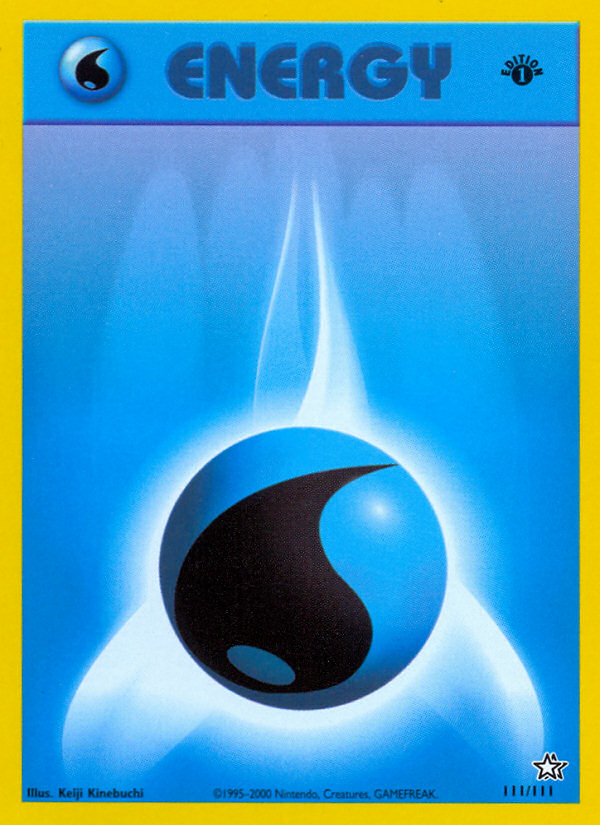
Image courtesy of TCGdex.net
Regional Differences in Water Energy Usage Across Pokémon TCG Tournaments
Basic energy cards are the quiet workhorses of any Pokémon TCG deck, and Water Energy from Neo Genesis is a perfect lens for examining regional playstyles. While the card itself is simple on the surface—a straightforward resource to power Water-type attacks—the way tournaments in different regions approach its inclusion can reveal deeper currents in metagaming, event formats, and collector culture. This Water Energy, a common staple illustrated by Keiji Kinebuchi, is both a practical tool in gameplay and a collectible artifact that speaks to the era’s design choices. ⚡🔥
Neo Genesis introduced a new generation of cards and a revived sense of regional identity in tournaments. Water Energy sits at the intersection of universality and regional nuance. As a basic Energy card, it powers Water-type basics and evolves the tempo of matches: you want enough energy to execute early aggressive plays, but not so much that you brick your hand later in the game. Regions around the world observe these tradeoffs differently, yielding distinct deck-building philosophies at the table. 💎🎴
Why regions diverge in practice
- Regional metagames shape energy density. In regions where Water-type archetypes are prominent, players tend to include a higher ratio of Water Energy to ensure consistent access to key early attacks. In contrast, regions with more multi-type or colorless strategies may favor a leaner energy count, banking on versatile draw and search tools to fetch energy when needed. The Water Energy’s role as a reliable power source makes it a natural barometer for regional pace and risk tolerance. 🧭
- Format and pool realities matter. The card’s legal status—Standard and Expanded—means tournaments in different regions may emphasize different formats and card pools. Some regions lean into Modern-era formats with dense energy requirements, while others celebrate broader history or sealed formats where basic energy density determines the speed of a deck’s development. Water Energy remains a steady baseline, but its practical utility shifts with the surrounding card ecosystem. 🌍
- Availability and print variations influence pricing and pickup. The Neo Genesis Water Energy comes in first-edition and regular prints, with a rarity labeled as Common. In markets with strong first-edition communities, the 1st-edition stamp adds collectible appeal, sometimes nudging regional interest beyond raw power needs. CardMarket and TCGPlayer data show how regionally accessible prints—plus the appeal of stamp variants—affect perception of value and demand. 💸
- Collectors’ culture and event turnout shape discourse. Some regions prize pristine condition and 1st-edition foil or stamp variants, while others prioritize affordable, widely available copies for casual tournament play. The Water Energy thus functions as both an engine for battles and a touchstone for collectors assessing regional trends in pricing and preservation. 📈
- Artistic and historical context informs sentiment. Keiji Kinebuchi’s classic Water Energy illustration evokes nostalgia for many players. In regions where vintage art and set-print history resonate, this card becomes a bookmark in a player’s journey—an approachable entry point to Neo Genesis-era collecting and deck-building, rather than just a supply item. 🎨
Beyond these macro factors, players tailor their boards to practical realities: how often can you reliably draw into your engine? Do you have enough energy to power early threats, or should you invest in search tools to fetch energy as the matchup demands? These questions are often debated at regional events, and the Water Energy acts as a constant reference point in those conversations. ⚡
Practical takeaways for players and organizers
- Deck-building heuristics vary by region. While a 60-card Constructed deck often hovers around a baseline energy count, the exact number you see in regional decks can swing with local archetypes. In water-forward lineups, you might see a slightly heavier energy curve to ensure you don’t stall against faster opponents.
- Sealed events change the math. In many regions, sealed formats rely on what you pull from booster packs, so players prioritize flexibility and energy density that aligns with a mix of water and support Pokémon. Water Energy remains a reliable pick for a broad pool, but its relative value shifts with the opening pool. 🧩
- Pricing signals local interest, not only power. For collectors, the Water Energy shows how print runs and edition status boost regional enthusiasm. The 1st-edition stamp, while primarily a collectible feature, also affects perceived value in specific markets, influencing how players curate their Neo Genesis collections. 💎
- Strategic pacing and closure. Regions with strong early-game pressure often favor energy distributions that enable a clean first few turns. Conversely, regions that value late-game control may lean on draw and stall tools alongside a steady energy supply to outlast opponents. The Water Energy’s simplicity makes it a dependable anchor in both approaches. 🎮
“Even a humble Energy card can reveal how a region plays the same game with different rhythms.”
From a gameplay perspective, the Water Energy is intentionally straightforward in its function, yet its regional use becomes a lens into the local meta. The basic nature of Water Energy makes it universally essential, but regional strategies—driven by player preferences, event formats, and print availability—shape how often you include it, how you fetch it, and when you consider it expendable in a given matchup. This is the beauty of the Pokémon TCG ecosystem: a simple resource can reflect diverse playing styles across the globe. 🌍🎴
For collectors, the card’s status as a common basic energy with a 1st-edition variant adds a layer of regional interest. The Neo Genesis set, identified by the card code neo1, carries both historical significance and ongoing relevance in modern conversations about vintage energy cards. The illustrated edge of Keiji Kinebuchi remains a draw for many, reminding us that even the most utilitarian components of a deck can carry artistic and cultural weight. 🖌️
As tournaments continue to evolve, regional players will keep refining how they blend this unassuming card into their strategies. Whether you’re drafting a sealed pool or building a slow-burn control deck, Water Energy serves as a steady constant—ready to power the next big move or simply keep the board ticking along as you set up your win condition. ⚡🔥
Neon Phone Case with Card Holder MagSafe Card StorageMore from our network
- https://transparent-paper.shop/blog/post/build-powerful-personal-branding-template-kits/
- https://crypto-acolytes.xyz/blog/post/nft-stats-chubby-ape-gen2-443-from-chubby-ape-gen2-collection/
- https://blog.digital-vault.xyz/blog/post/how-buyouts-affect-thornplate-intimidator-and-small-set-cards/
- https://wiki.digital-vault.xyz/wiki/post/pokemon-tcg-stats-mew-card-id-a1a-031/
- https://blog.rusty-articles.xyz/blog/post/ezio-auditore-da-firenze-mastering-randomness-and-player-agency-in-mtg/
Water Energy
Set: Neo Genesis | Card ID: neo1-111
Card Overview
- Category: Energy
- HP:
- Type:
- Stage: Basic
- Dex ID:
- Rarity: Common
- Regulation Mark: —
- Retreat Cost:
- Legal (Standard): Yes
- Legal (Expanded): Yes
Description
Pricing (Cardmarket)
- Average: €0.29
- Low: €0.02
- Trend: €0.26
- 7-Day Avg: €0.38
- 30-Day Avg: €0.29
Support Our Decentralized Network
Donate 💠More from our network
- https://transparent-paper.shop/blog/post/build-powerful-personal-branding-template-kits/
- https://crypto-acolytes.xyz/blog/post/nft-stats-chubby-ape-gen2-443-from-chubby-ape-gen2-collection/
- https://blog.digital-vault.xyz/blog/post/how-buyouts-affect-thornplate-intimidator-and-small-set-cards/
- https://wiki.digital-vault.xyz/wiki/post/pokemon-tcg-stats-mew-card-id-a1a-031/
- https://blog.rusty-articles.xyz/blog/post/ezio-auditore-da-firenze-mastering-randomness-and-player-agency-in-mtg/