
Image courtesy of TCGdex.net
Tracing the Evolution of TCG Card Design for Psychic Pokémon
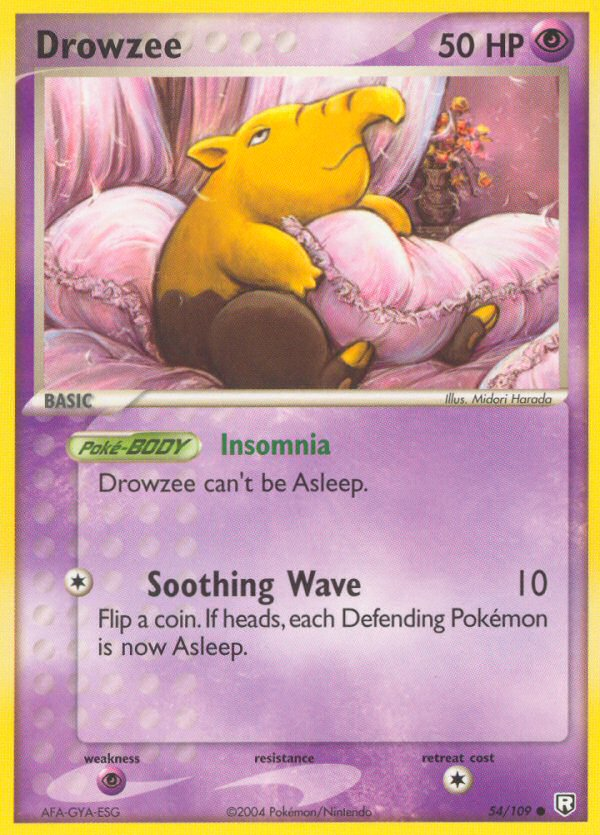
Psychic creatures like Drowzee have long offered a window into how the Pokémon TCG balances mind-power symbolism with practical gameplay. This discussion centers on a particular snapshot from Team Rocket Returns (ex7): a Common Basic Psychic Pokémon with 50 HP, illustrated by Midori Harada. The holo variant, stamped with the set logo, captures a transitional moment in card aesthetics—when subtle shimmer and clear iconography began guiding players through a sea of text, abilities, and strategies. The evolving design language around Drowzee mirrors a broader shift in the TCG: from simple, text-heavy cards to clearer readability, richer art, and mechanics that reward thoughtful decision-making ⚡🎴.
Card data snapshot
- Name: Drowzee
- Set: Team Rocket Returns (ex7)
- Rarity: Common
- Type: Psychic
- Stage: Basic
- HP: 50
- Illustrator: Midori Harada
- Attack: Soothing Wave — Cost: Colorless; Damage: 10; Effect: Flip a coin. If heads, each Defending Pokémon is now Asleep.
- Ability: Insomnia (Poke-BODY) — Drowzee can't be Asleep.
- Weakness: Psychic ×2
- Variant: holo with set-logo
What makes this card a compelling study is how its design highlights both mechanical intent and artistic tone. The Poke-Body Insomnia aligns with Drowzee’s theme—dreams, sleep, and psychic meddling—while the Soothing Wave attack creates a crisp, coin-flip risk/reward moment that players learned to anticipate on the table. The rarity being Common doesn’t undermine its fame; holo versions of ex7-54 became coveted keepsakes, serving as a gateway between approachable play and collector aspiration 🎨💎.
How card design evolved to support Psychic Pokémon like Drowzee
Across the early 2000s, the Pokémon TCG shifted from straightforward string-reinforced layouts to more deliberate visual hierarchies. For a Psychic-intrigued roster like Drowzee, designers experimented with typography, color palettes, and iconography that clearly signaled energy costs, outcomes of attacks, and the presence of special conditions. The ex7 era brought holo stamping and set logos that made rare cards instantly recognizable in binders and on tournament tables. This era also popularized persistent abilities—Poke-Bodies and Poke-Powers—that subtly altered how players approached turns, rather than relying solely on raw damage. Drowzee’s Insomnia is a prime example: a simple yet meaningful effect that reinforced the Psychic identity without cluttering the card’s narrative. The balance between flavor and function began to matter as much as horsepower on the board 🔮🎴.
As the set art matured, illustrators like Midori Harada brought a softer, dreamlike aesthetic to Drowzee’s frame. The holo variant’s shimmer amplifies the dream motif without sacrificing legibility of the ability text or the coin-flip mechanic. In tandem with the set logo stamp, these design cues helped players quickly identify a card’s status on the table—even when reading conditions like “Asleep” or tracking a coin flip outcome. Over time, the card template evolved to emphasize clarity: more generous spacing, improved symbol sizing, and a cleaner separation between the “attack” and “ability” blocks. The result is not only a more legible card during heated matches but also a more collectible, visually cohesive family of Psychic cards that fans could recognize at a glance ⚡✨.
Gameplay strategy meets design philosophy
From a gameplay perspective, Soothing Wave’s 10 damage for a Colorless cost with a chance to apply Sleep created a thematic tension—risk management and tempo. The possibility of your opponent waking up or remaining asleep influenced deck-building choices across the Psychic archetypes of the era. Yet Insomnia’s Poke-BODY kept Drowzee in the safety net, preventing you from being locked out by your own dream-inducing powers. This balance between offensive potential and defensive resilience demonstrates how card design can nudge players toward deeper strategic planning. It’s not just about raw numbers; it’s about the rhythm of turns, the psychology of coin flips, and the narrative of dreams entering the battlefield with every draw 🔮🎮.
Collectors appreciate this blend of strategy and artistry. The holo ex7-54 is a tangible artifact of an era when glow and gloss signaled rarity while staying faithful to the card’s character and mechanics. The market data reflects a wider trend: standard copies of Drowzee from this era hover in the affordable range, while holo versions—especially those with the reverse-holo or premium stamping—command more attention and higher prices. On modern price tracking, non-holo copies sit modestly, while holo versions trend upward, with reverse-holo variants occasionally reaching notable peaks depending on condition and demand. It’s a reminder that design fidelity and print scarcity together shape value in enduring ways 💎📈.
Collecting a piece of design history
The Drowzee card stands as a microcosm of how the Pokémon TCG progressed—toward clearer layouts, expressive art, and mechanics that rewarded thoughtful play without overwhelming players. For collectors today, ex7-54 offers more than nostalgia; it’s a snapshot of how a common Pokémon could become a design ambassador for a type. The illustrator’s touch, the holo stamp, and the strategic elegance of Insomnia all converge into a card that remains accessible for new players while remaining a trophy for veterans. If you’re exploring the Team Rocket Returns era, Drowzee is a calm, dreamlike anchor—an emblem of how card design can elevate a simple Psychic Pokémon into a lasting symbol of both play and memory ⚡🎨.
And as the hobby continues to evolve, the lessons from Drowzee’s design—clarity, theme-consistent art, and balanced game effects—still resonate with modern sets. Designers keep asking: How can a card feel visually distinct without compromising readability? How can a single ability kind of whisper its story while a coin flip decides a near-term fate? These questions echo in every new Psychic card that lands on the table and in every collector’s binder where a holo ex7-54 still shines as a small, shimmering milestone 🎴🔥.
Slim Lexan Phone Case for iPhone 16 - Glossy Ultra-ThinMore from our network
- https://blog.digital-vault.xyz/blog/post/mastering-efficient-sprint-reviews-for-faster-team-alignment/
- https://articles.zero-static.xyz/blog/post/how-golden-hind-changes-creature-combat-math-in-mtg/
- https://transparent-paper.shop/blog/post/stable-diffusion-xl-prompt-storyboard-sketch-feather-texture-encrypted-glyphs-midnight-blue-mustard-accents-line-art-tactile-texture/
- https://blog.zero-static.xyz/blog/post/razor-hippogriff-reveals-its-planes-culture/
- https://wiki.digital-vault.xyz/wiki/post/pokemon-tcg-stats-deino-card-id-bw6-93/
Drowzee
Set: Team Rocket Returns | Card ID: ex7-54
Card Overview
- Category: Pokemon
- HP: 50
- Type: Psychic
- Stage: Basic
- Dex ID: 96
- Rarity: Common
- Regulation Mark: —
- Retreat Cost:
- Legal (Standard): No
- Legal (Expanded): No
Description
Abilities
-
Insomnia — Poke-BODY
Drowzee can't be Asleep.
Attacks
| Name | Cost | Damage |
|---|---|---|
| Soothing Wave | Colorless | 10 |
Pricing (Cardmarket)
- Average: €0.56
- Low: €0.1
- Trend: €0.61
- 7-Day Avg: €0.69
- 30-Day Avg: €0.58
Support Our Decentralized Network
Donate 💠More from our network
- https://blog.digital-vault.xyz/blog/post/mastering-efficient-sprint-reviews-for-faster-team-alignment/
- https://articles.zero-static.xyz/blog/post/how-golden-hind-changes-creature-combat-math-in-mtg/
- https://transparent-paper.shop/blog/post/stable-diffusion-xl-prompt-storyboard-sketch-feather-texture-encrypted-glyphs-midnight-blue-mustard-accents-line-art-tactile-texture/
- https://blog.zero-static.xyz/blog/post/razor-hippogriff-reveals-its-planes-culture/
- https://wiki.digital-vault.xyz/wiki/post/pokemon-tcg-stats-deino-card-id-bw6-93/