
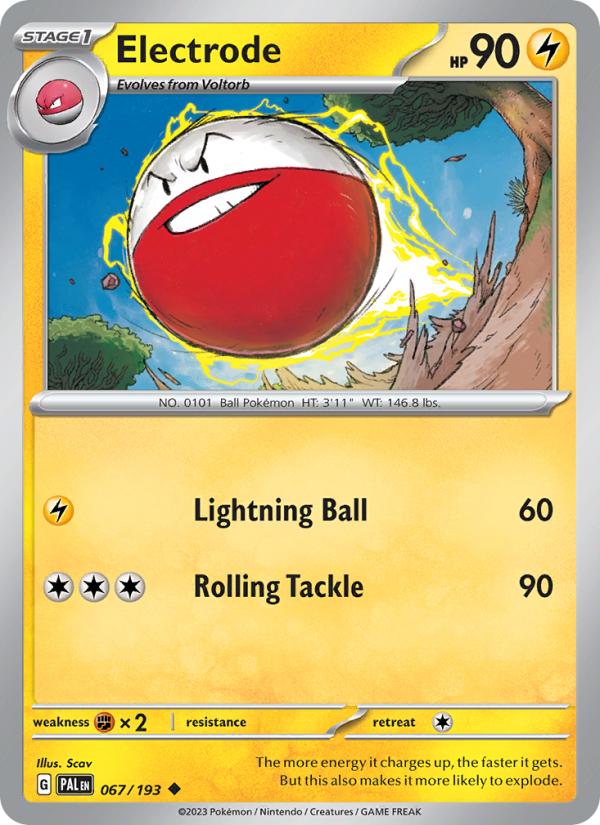
Image courtesy of TCGdex.net
Electrode Reprint Cycles and the Pokémon TCG Meta
Reprint cycles have always been a driving force behind the ebb and flow of the Pokémon Trading Card Game metagame. In the broader arc of competitive play, a card’s visibility, availability, and price can swing as new print runs surface or older copies are pulled from supply. Electrode, a Lightning-type Stage 1 evolving from Voltorb in the Paldea Evolved era, offers a particularly illustrative case study. With 90 HP and a pair of distinct attacks—Lightning Ball for 60 and Rolling Tackle for 90—Electrode sits at an intriguing intersection of accessibility and raw damage potential. The card’s illustrator, Scav, gives Electrode a crisp, electric presence that fans recognize on both tables and collectors’ shelves. This reprint dynamic isn’t just about dollars and cents; it shapes deck-building decisions, meta-control, and how players plan around evolving formats.
Set context and card fundamentals
Electrode is a Stage 1 Electric Pokémon from the Paldea Evolved set (sv02). Its evolution from Voltorb aligns with the classic fast-bloom strategy: a quick threat that can punish opponents who fall behind on early damage. Its attacks illustrate two common archetypes in older and newer cycles: a reliable early-game pressure tool (Lightning Ball, 60 for a single Lightning Energy) and a heavier, late-game closer that requires more energy (Rolling Tackle, 90 for three Colorless). HP sits at a modest 90, a typical baseline for many Stage 1 Electric Pokémon, making board control and energy management essential. In terms of format eligibility, Electrode remains legal in both Standard and Expanded, marked with Regulation Mark G, signaling ongoing relevance as rotation happens and new reprints re-ground the competitive landscape.
Artistically, Scav’s depiction captures the zippy electricity and mischievous aura that Electrode fans associate with the species. The Paldea Evolved cycle itself leans into a vivid, modernized aesthetic that resonates with players who started collecting in the Sun & Moon era and kept going through Sword & Shield and beyond. This blend of nostalgia and contemporary art helps keep reprints appealing not only to competitive players but to graders and collectors who relish specific print runs and illustrators.
Why reprint cycles matter for competitiveness
Reprint cycles influence competitiveness in multiple ways. First, they impact card availability. When Electrode sees a fresh print, more players can add it to their decks without hunting down rare copies. That accessibility reduces lock-downs on aggressive Electric strategies, allowing a wider audience to experiment with Voltorb-to-Electrode lines, often alongside other Lightning-focused staples. Second, reprints affect price trends. CardMarket data shows a current average around 0.03 EUR for non-holo Electrode copies, with holo variants historically fetching higher values (averages near 0.16 EUR or more depending on print). A robust reprint cadence typically tempers price spikes that might occur when a card suddenly emerges as a niche meta centerpiece. For budget players, this can unlock more versatile, durable deck shells that rely on Electrode’s speed and threat range without overwhelming electronics budgets.
From a strategic perspective, Electrode’s two attacks illustrate a common reprint-driven dynamic: early power versus mid-to-late presence. Lightning Ball offers dependable early tempo, while Rolling Tackle embodies the potential to close out games when the right energy mix appears on the bench. Reprints that broaden the pool of available Lightning-energy and colorless-energy support can swing decisions about which Energy Acceleration and issue-resolving tools to pair with Electrode. Deck builders often weigh whether to accelerate with special energies, draw engines, or supportive tools that ensure three Colorless energies for Rolling Tackle can be reached by turn four or five. As reprint cycles bring more Electrode copies onto shelves, players gain greater flexibility in assembling a streamlined offense without sacrificing board presence to slow early returns.
“A card’s value isn’t just the damage it prints on a card; it’s the doors it opens for deck design and playstyle.” ⚡🔥
Meta implications and deck-building takeaways
- Budget-friendly access: More print runs mean more players can experiment with Electrode lines, potentially diluting the field of a few overbearing Archetypes and encouraging more hybrid or tempo-based Electric decks.
- Format breathing room: Because Electrode remains legal in both Standard and Expanded, reprints help keep it relevant as the metagame pivots with new sets. This cross-format presence makes it a useful pivot card when players test mid-range or agile strategies that rely on quick damage before stalling responses hit the field.
- Pricing signals: The CardMarket data suggests a stable price baseline for non-holo Electrode, with holo versions often carrying premium values. Reprint cycles can compress gaps between variants, encouraging collectors to diversify beyond the rare chase cards and into the broader Electrode family—often a win for competitive budgeting as well as long-term collection value.
- Illustration and collector value: With Scav at the helm for this Electrode, the artistic appeal remains a lever for collector interest. Reprint cycles that reissue a beloved illustration or feature a standout variant can re-ignite demand, even if raw gameplay value remains similar.
: In practice, Electrode can slot into evolving Lightning-focused shells that capitalize on quick start damage and mid-game pressure. Reprints that accompany supportive Trainer cards, Stadiums, or Energy acceleration options can push Electrode from a niche pick to a dependable pivot in multi-deck matchups.
Collectibility, art, and ongoing relevance
For collectors, Electrode’s place in Paldea Evolved is part of a broader narrative—how reprints keep beloved mechanics accessible while preserving the thrill of pursuit for newer print runs. The color and style choices in Scav’s artwork help Electrode remain visually striking across editions, and reprints often spark fresh discussion among fans about balance, power level, and the evolving relationship between artwork and gameplay. In this sense, reprint cycles do more than refresh stock; they refresh the conversation about how players perceive and utilize Electrode within the current meta.
As you plan your next tournament or casual evening, consider Electrode not just as a two-attack option but as a barometer for how reprint cycles influence the competitive landscape. The ongoing balance between accessibility, price, and power creates a living, breathing environment where strategy, collection, and storytelling all intersect. Whether you’re chasing a holo variant for your binder or testing a budget-friendly Volt-based deck, Electrode’s reprint history offers a practical lens into how the Pokémon TCG meta evolves with every new print run. 🎴💎
Phone Grip Kickstand Click-on HolderMore from our network
- https://wiki.digital-vault.xyz/wiki/post/pokemon-tcg-stats-blaziken-fb-card-id-pl3-142/
- https://crypto-acolytes.xyz/blog/post/nft-stats-planet-kaiju-6300-from-planet-kaiju-collection/
- https://blog.crypto-articles.xyz/blog/post/nft-data-gold-bar-30-from-solana-gold-bars-collection-on-magiceden/
- https://crypto-acolytes.xyz/blog/post/kamino-kmno-risks-amid-solana-meme-coin-with-thin-liquidity/
- https://blog.crypto-articles.xyz/blog/post/nft-data-angel-1709-from-angels-collection-on-magiceden/
Electrode
Set: Paldea Evolved | Card ID: sv02-067
Card Overview
- Category: Pokemon
- HP: 90
- Type: Lightning
- Stage: Stage1
- Evolves From: Voltorb
- Dex ID: 101
- Rarity: Uncommon
- Regulation Mark: G
- Retreat Cost: 1
- Legal (Standard): Yes
- Legal (Expanded): Yes
Description
Attacks
| Name | Cost | Damage |
|---|---|---|
| Lightning Ball | Lightning | 60 |
| Rolling Tackle | Colorless, Colorless, Colorless | 90 |
Pricing (Cardmarket)
- Average: €0.03
- Low: €0.02
- Trend: €0.05
- 7-Day Avg: €0.04
- 30-Day Avg: €0.03
Support Our Decentralized Network
Donate 💠More from our network
- https://wiki.digital-vault.xyz/wiki/post/pokemon-tcg-stats-blaziken-fb-card-id-pl3-142/
- https://crypto-acolytes.xyz/blog/post/nft-stats-planet-kaiju-6300-from-planet-kaiju-collection/
- https://blog.crypto-articles.xyz/blog/post/nft-data-gold-bar-30-from-solana-gold-bars-collection-on-magiceden/
- https://crypto-acolytes.xyz/blog/post/kamino-kmno-risks-amid-solana-meme-coin-with-thin-liquidity/
- https://blog.crypto-articles.xyz/blog/post/nft-data-angel-1709-from-angels-collection-on-magiceden/