
Image courtesy of TCGdex.net
Strategic Foundations for a Saffron City Gym Deck
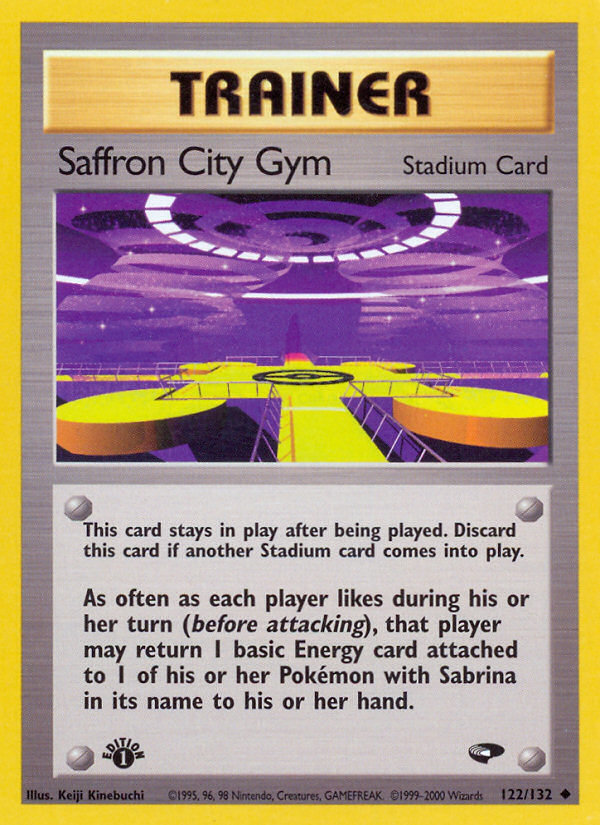
For fans who crave tempo and control, the Gym Challenge era offered some of the most flavorful stadium-style playbooks in the Pokémon TCG. Saffron City Gym, a Trainer card with a distinct place in the ecosystem, is more than a collectible pin on a sleeve—it’s a pivot point for deck-building. Classified as a Trainer and hailing from the Gym Challenge set, this card (localId 122) carries the hand-painted charm of illustrator Keiji Kinebuchi. Its first-edition stamp marks it as a coveted piece for collectors, but its true strength emerges when you lean into stadium support and the ebb-and-flow of battlefield effects. ⚡🔥
What makes Saffron City Gym so intriguing is its potential to mold the pacing of a match. Decks built around Stadium support capitalize on shared terrain effects, turning the table after a careful setup. While the card itself doesn’t deliver an HP punch or an attack like a Pokémon, it can tilt the board in your favor by curating what both players can do on each turn. Designing around this card means embracing a philosophy: control the stadium, and you control the rhythm of the game. It’s a nostalgic reminder that in Pokémon TCG history, modifiers to the battlefield often outrun the raw power of one big hitter. 🎴🎨
Card Spotlight: What Saffron City Gym Brings to the Table
The Gym Challenge set introduced a range of stadium-style Stadiums and Trainer helpers that encouraged players to craft archetypes around field conditions. Saffron City Gym is uncommon, a sign that it was intended for slightly more deliberate, crafted strategies rather than a rushed, “slam-dunk” deck. As an early-Edition possibility, collectors chase the unique stamp as well as the nostalgic artwork—a Keiji Kinebuchi signature that fans of the era instantly recognize. The card’s text (in the era’s style) is not about squaring up a single attack, but about shaping the broader arena in which your Pokémon and Trainers operate. In practice, you’ll want to pair it with other stadiums and draw/consistency tools to ensure you reach the moment when the stadium’s effect matters most. 🏙️
Set and rarity snapshot: Gym Challenge, Uncommon, first Edition stamp available in some prints. The artwork by Keiji Kinebuchi captures a neon-lit, bustling feel of Saffron City that fans remember fondly—an aesthetic that translates into how players remember the game’s older, more tactile format. Pairing the card with a well-timed Stadium mid-game can buy crucial turns, slow your opponent’s setup, or smooth your own road to victory.
Market pulse around Saffron City Gym sits at a gentle, collector-forward rhythm. CardMarket data shows an average price around 1.34 EUR with a low point near 0.20 EUR and a rising trend, while TCGPlayer data (for 1st edition and unlimited variants) indicates modest to solid interest: first-edition copies hover in a low-to-mid USD range, with unlimited versions typically a bit cheaper but still desirable for players building retro hybrids. For enthusiasts, this is less about “must-have” power and more about owning a piece of the Gym Challenge era’s design philosophy. 💎
Drafting a Stadium-Centric Strategy
If you’re assembling around Saffron City Gym, your core objective is to control when and how stadium effects apply to both players. A stadium-centric deck thrives on timing, redundancy, and resilience. Here are practical guidelines to shape a solid foundation:
- Stadium tempo is the backbone. Include multiple stadiums in your deck to ensure you can deploy the Saffron City Gym effect when you need it most. The goal is to reach a point where you can establish your preferred stadium environment and keep it active through your opponent’s attempts to disrupt it.
- Balance with draw and search engines. Since Saffron City Gym is a Trainer card and not a direct attacker, your engine should focus on reliable draws and quick access to key pieces. Prioritize trainers that accelerate setup or fetch Stadiums, so you can reliably hit your timing window without stalling on turns.
- Cover your bases against disruption. Stadiums can be disrupted, countered, or swapped. Build in resilience with tools that recycle or search for additional stadiums and supportive Trainers, so you don’t lose momentum if your opponent counters your primary plan.
- Energy and tempo considerations. While the core is battlefield control, you still need a stable energy base and a consistent line of play. Include a balance of energy and basic resources to keep your Pokémon able to attack when the stadium window opens.
- Collector-minded pacing. If you’re playing for the long game, a stadium-focused deck often outlasts aggressive early-beatdown decks. Use the nostalgia factor to show seasoned players how the gym’s terrain textures the late game and keeps the pressure on without needing a single, punishing KO each turn.
For a practical starting point, think in terms of a 60-card skeleton: a small but sturdy engine of stadiums (including Saffron City Gym), a handful of draw/search trainers, and a tested line-up of Pokémon that can stall or tempo-drive through the stadium window. The exact creature lineup will depend on your collection and era constraints, but the principle remains deliciously simple: your battlefield rules set the pace, so your Pokémon and non-Pokémon tools must ride with the flow. ⚡🎮
Collector Insights and Artful Lore
Beyond the tabletop, Saffron City Gym represents a delightful slice of Pokémon TCG history. Keiji Kinebuchi’s illustration threads the card’s identity into the broader Gym Challenge aesthetic: a cityscape of neon signs and bustling energy, a reminder that battles aren’t just about who swings harder but about who reads the board best. The 1st Edition stamp offers a tactile nostalgia that many players seek in their display binders, and the Uncommon rarity makes it attainable for many enthusiasts who want a retro centerpiece without breaking the bank. The card’s ongoing interest is a reminder of how style and strategy can intertwine to elevate a simple stadium card into a cornerstone of a themed deck. 🔎💎
For price-conscious collectors, current market data helps set expectations. CardMarket shows a modest average around 1.34 EUR with variability across editions, while TCGPlayer presents a broader spread depending on edition status. The value isn’t just monetary—it's the satisfaction of owning a well-loved piece of the Gym Challenge era that still has practical deck-building relevance for fans who enjoy the era’s distinct pacing. 💼
Foot Shape Neon Ergonomic Mouse Pad with Memory Foam Wrist RestMore from our network
Saffron City Gym
Set: Gym Challenge | Card ID: gym2-122
Card Overview
- Category: Trainer
- HP:
- Type:
- Stage:
- Dex ID:
- Rarity: Uncommon
- Regulation Mark: —
- Retreat Cost:
- Legal (Standard): No
- Legal (Expanded): No
Description
Pricing (Cardmarket)
- Average: €1.34
- Low: €0.2
- Trend: €1.26
- 7-Day Avg: €1.46
- 30-Day Avg: €1.4
Support Our Decentralized Network
Donate 💠More from our network
- https://blog.digital-vault.xyz/blog/post/creating-motivational-poster-templates-for-digital-sales/
- https://transparent-paper.shop/blog/post/deploying-your-first-saas-product-a-practical-guide/
- https://rusty-articles.xyz/tmpr4i2i115/0fd72ebc.html
- https://blog.crypto-articles.xyz/blog/post/nft-data-drifter-107-from-drifters-masterwork-collection-on-magiceden/
- https://blog.crypto-articles.xyz/blog/post/using-gray-glazed-terracotta-with-fabric-for-creative-builds/